




Picture this.
A retailer launches a new collection they’re confident about, only to watch it sit on shelves, draining cash, increasing dead stock, and confusing customers. Meanwhile, a competitor drops a new product and sells out in weeks.
What made the difference?
In today’s retail landscape, success isn’t about who has the biggest store or the flashiest branding — it’s about who can build the right product, at the right time, with the right insight.
This guide will show you how top retailers do exactly that and how you can too.
The New Retail Reality: What’s Changed
- Hyper-Competitive Market: Retail today is a battle for attention, and every brand, from fast fashion giants to premium labels to emerging D2C players, is fighting for the same customer wallet. Traditional advantages like store size or brand legacy don’t guarantee wins anymore. Speed has become a survival factor. The brands that can develop, test, and launch products faster are the ones that stay relevant.
- Rapid Trend Cycles: Trend cycles used to last months. Now they shift in days. Micro-trends spark from TikTok, seasonal drops become monthly drops, and influencer-driven demand can spike overnight. Retailers no longer have the luxury of reacting; they must predict, prepare, and prototype faster than ever. Agility is the new currency.
- Customer Expectations Are Higher Than Ever: Today’s shoppers expect everything: personalised experiences, seamless omnichannel journeys, and fast delivery, all while still demanding competitive pricing. They want better quality, better value, and better convenience. This means retailers must elevate every stage of product development to ensure the final product meets these rising standards.
What Is Retail Product Development?
Retail product development is the end-to-end process of transforming a product idea into something ready for the market, from trend research and concept creation to prototyping, sourcing, quality testing, and final production. It’s the backbone of every successful retail brand because it determines what you launch, how fast you launch, and whether customers actually buy it.
In today’s fast-moving retail landscape, strong product development ensures your brand stays competitive by building products with the right design, right quality, right price point, and right timing. It aligns customer insights, supplier capabilities, and business goals into a streamlined development pipeline. For retailers aiming to scale, a robust product development strategy isn’t optional; it’s a growth engine, a cost optimizer, and a market differentiator.
Building Winning Retail Products: A Step-by-Step Framework
To thrive in today’s retail environment, brands need more than creativity; they need a structured product development framework that reduces risk, accelerates timelines, and ensures every product launched is backed by data, insight, and strong execution. Here’s how modern retailers build products that actually win.
Trend Forecasting & Market Intelligence: Successful retail products start with understanding the market. Trend forecasting is no longer about guesswork; it’s about reading real-time market signals and combining them with deep customer insight. Retailers analyse:
- Micro and macro trends across fashion, lifestyle, and consumer behaviour
- Seasonal patterns and sales cycles
- Competitor launches and pricing shifts
- Customer purchasing data and sentiment
- Influencer impact and cultural shifts
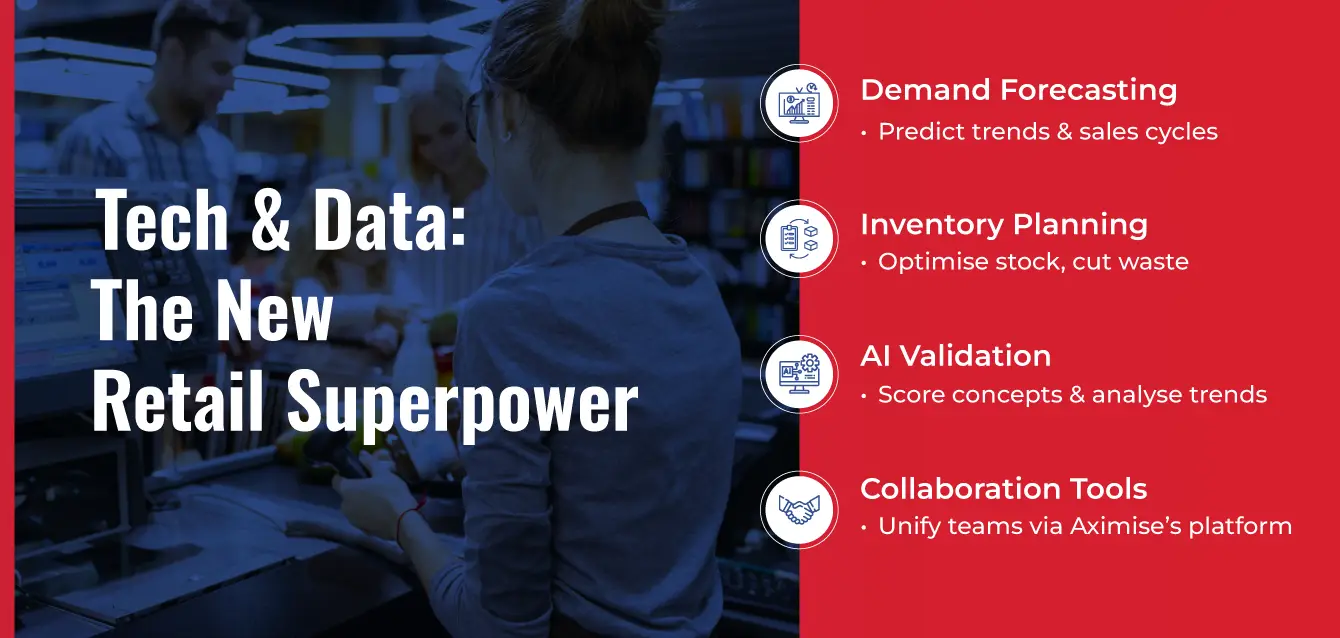
Today, leading brands also rely on AI-powered trend forecasting tools that can predict product demand, colour preferences, material usage, and design patterns before the trend peaks. Data analytics helps retailers stay ahead of the curve, reducing the risk of launching products that won’t sell.
Customer-Centric Ideation: The next step is to ideate products based on real customer needs, not assumptions. Customer-centric ideation focuses on understanding:
- Buying behaviour (what they choose, when they buy, how often)
- Price point sensitivity (premium vs. affordable expectations)
- Utility and purpose (does it solve a real problem?)
- Design preferences (style, colour, fit, materials)
Retailers use methods like surveys, reviews, competitor analysis, and social listening to identify what customers actually want. This ensures the product has a clear market fit from day one. In a competitive market, insights-driven ideation drastically improves conversion rates, sell-through, and repeat purchases.
Prototyping Quickly — The Agile Way: In retail, speed is an advantage, and slow prototyping kills momentum. Agile prototyping allows brands to test ideas fast, refine quickly, and reduce development risks. Types of prototypes include:
- Low-fidelity prototypes – quick sketches, sample mockups, material swatches
- High-fidelity prototypes – full working samples closer to final production
Aximise follows a rapid prototyping workflow where design iterations, sampling, and feedback cycles happen in shortened sprints. This compresses timelines, ensures quicker validation, and keeps the product development pipeline moving without delays.
Supplier & Vendor Sourcing: No product development strategy succeeds without the right suppliers. Vendors determine cost, quality, reliability, and production speed; all critical to retail success. Retailers evaluate vendors based on:
- Production capacity and timelines
- Raw material quality
- Past performance and reliability
- Margin impact and cost structure
- Compliance, ethics, and certifications
Aximise brings a curated partner network across categories, enabling brands to find the right manufacturing partners faster. With vetted suppliers and a managed sourcing process, retailers reduce risk and avoid costly delays.
Quality Assurance & Testing: Quality is one of the biggest differentiators in retail, especially when customers expect durability, comfort, and safe materials. Strong QA ensures the product meets brand standards before production begins. This includes:
- Lab testing for materials, safety, and chemical compliance
- Durability tests for stress, wear, and longevity
- User trials to gather feedback on comfort, utility, and experience
- Production QA checks during sampling and bulk manufacturing
Robust quality testing reduces defects, product returns, and negative reviews, protecting brand reputation and boosting customer trust.
Costing & Pricing Strategy: A winning retail product balances profit margins, production cost, and market expectations. Costing involves evaluating material cost, manufacturing charges, logistics, packaging, and overheads. Retailers use value engineering to optimise:
- Material choices
- Design simplification without losing appeal
- Efficient production methods
- Inventory and logistics costs
The goal is to create a product customers love at a price they are willing to pay, while still maintaining healthy margins.
Go-to-Market & Launch Strategy: A great product needs an equally strong launch strategy. This stage covers everything required to introduce the product effectively and maximise early sales. Key elements include:
- Packaging design that communicates quality and brand identity
- Visual merchandising for online and offline retail
- Pricing strategy aligned with market positioning
- Marketing positioning and storytelling
- Launch campaigns across social media, email, and retail channels
Post-launch, brands analyse performance data, including sell-through rate, customer feedback, and demand curves, to improve future collections. This creates a continuous improvement loop in the product development cycle.
The Retail Playbook for 2026 & Beyond
- Invest in Product Innovation: In an oversaturated retail landscape, innovation is the only real competitive advantage. Retailers that consistently introduce fresh designs, improved functionality, and unique experiences build stronger loyalty and stay ahead of fast-moving trends. Product innovation is no longer optional; it’s the moat that protects your brand long-term.
- Build Faster Cycles: The brands winning today are the brands moving fast. Shortened development cycles allow retailers to catch trends at the right moment, reduce inventory risk, and improve cash flow. Speed = relevance = revenue, and the ability to execute quickly has become a core retail capability.
- Reduce Risk With Data: Data-driven retail is the future. Using customer insights, trend analytics, and demand forecasting helps brands validate early, test often, and avoid costly missteps. When decisions are backed by data instead of guesswork, product success rates increase dramatically.
- Partner with Specialists: Retailers don’t have to do everything in-house. Partnering with experts — especially for product development accelerates growth, improves quality, and shortens time-to-market. Specialist partners like Aximise bring category expertise, supplier networks, quality systems, and agile workflows, allowing brands to scale faster with less operational burden.
Winning in retail is no longer about having the biggest catalogue; it’s about having the right products, launched at the right time, with a development process that is efficient, agile, and customer-centric.
That’s where Aximise comes in.
Aximise helps retail brands transform ideas into high-performing products through a structured, tech-enabled product development process. From trend forecasting and rapid prototyping to supplier sourcing, quality assurance, and launch support, Aximise gives retailers the speed, clarity, and confidence needed to build products that succeed in the market.
If your brand is ready to innovate faster, reduce development risks, and launch products that customers genuinely want, Aximise is the partner designed to make that happen.
Build smarter. Launch faster. Grow stronger with Aximise.
Build smarter. Launch faster. Grow stronger with Aximise.